.
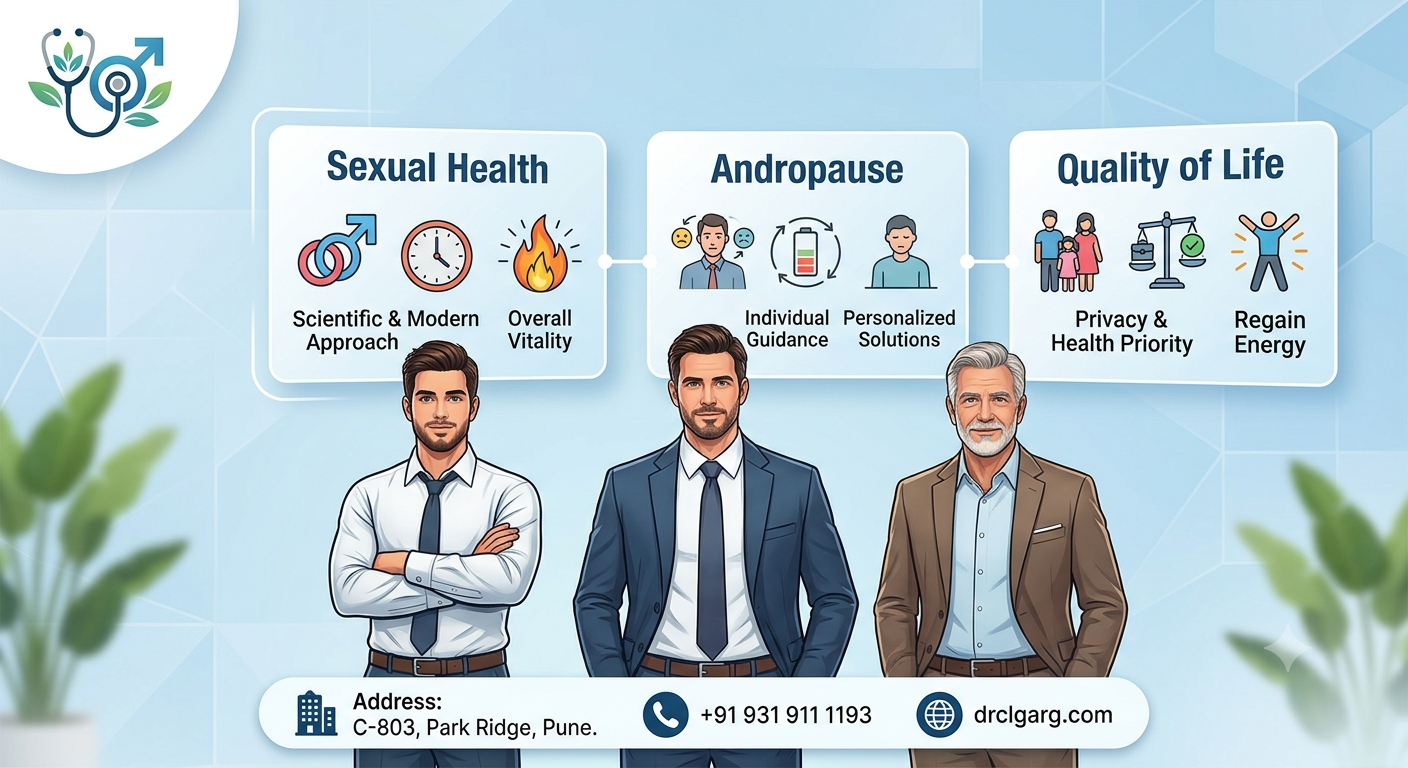
एंड्रोपॉज (Andropause): पुरुषों का स्वास्थ्य और जागरूकता
एंड्रोपॉज, जिसे अक्सर “पुरुष मेनोपॉज” भी कहा जाता है, उम्र बढ़ने के साथ पुरुषों में टेस्टोस्टेरोन के स्तर में धीरे-धीरे होने वाली गिरावट को संदर्भित करता है। यह एक स्वाभाविक प्रक्रिया है, लेकिन इसके लक्षण दैनिक जीवन की गुणवत्ता को प्रभावित कर सकते हैं।
मुख्य लक्षण
टेस्टोस्टेरोन में कमी के कारण निम्नलिखित लक्षण दिखाई दे सकते हैं:
- ऊर्जा में कमी: लगातार थकान महसूस होना।
- मूड में बदलाव: चिड़चिड़ापन, एकाग्रता में कमी या उदासी।
- शारीरिक परिवर्तन: मांसपेशियों की शक्ति में कमी और वसा में वृद्धि।
- यौन स्वास्थ्य: कामेच्छा (libido) में कमी या अन्य यौन समस्याएं।
महत्वपूर्ण जानकारी
चिकित्सकीय सलाह: एंड्रोपॉज के लक्षण अन्य स्वास्थ्य स्थितियों के समान हो सकते हैं। सही निदान के लिए रक्त परीक्षण (blood test) और योग्य चिकित्सक (endocrinologist/urologist) से परामर्श करना अनिवार्य है। बिना डॉक्टरी सलाह के टेस्टोस्टेरोन थेरेपी या कोई भी सप्लीमेंट न लें।
जागरूकता और जीवनशैली
एक स्वस्थ जीवनशैली इन लक्षणों के प्रभाव को कम करने में मदद कर सकती है:
- संतुलित आहार: पोषक तत्वों से भरपूर भोजन लें।
- नियमित व्यायाम: मांसपेशियों और हड्डियों के स्वास्थ्य को बनाए रखें।
- तनाव प्रबंधन: पर्याप्त नींद लें और तनाव कम करें।
Andropause: Men’s Health and Awareness
Andropause, often referred to as “male menopause,” refers to the gradual decline in testosterone levels as men age. While this is a natural process, the symptoms can affect one’s quality of life.
Key Symptoms
The decrease in testosterone may lead to:
- Low Energy: Persistent fatigue and reduced stamina.
- Mood Swings: Irritability, difficulty concentrating, or mood fluctuations.
- Physical Changes: Loss of muscle mass and increased body fat.
- Sexual Health: Reduced libido or other sexual dysfunctions.
Important Note
Medical Advice: Symptoms of andropause can mimic other medical conditions. It is essential to consult a qualified healthcare professional (endocrinologist or urologist) for proper diagnosis through blood tests. Avoid starting testosterone therapy or any supplements without clinical supervision.
Awareness and Lifestyle
A healthy lifestyle can help manage these symptoms:
- Balanced Diet: Focus on nutrient-dense foods.
- Regular Exercise: Essential for maintaining muscle and bone health.
- Stress Management: Prioritize adequate sleep and stress reduction techniques.